
MISSION STATEMENT
Preserving and sharing the ongoing story of Goshen


History of Goshen Historical Society
Origins and Early Settlement
Long before European settlement, the land that would become Goshen was home to Indigenous peoples including the Miami, Potawatomi, and Peoria tribes, who lived along the rivers and fertile lands of northern Indiana for generations. These communities were part of a broader Great Lakes cultural and trade network. Their presence shaped the region until federal policies and treaties in the early 19th century forced the removal of Native American populations, most notably through the Treaty of Chicago (1833) and the tragic Potawatomi Trail of Death (1837).
Goshen was officially platted in 1831 and soon designated the county seat of Elkhart County, chosen for its central location and agricultural promise. The city’s name was inspired by the Biblical Land of Goshen, symbolizing abundance and fertile land—an apt description of the area’s rich soil and farming potential.
Early settlers were largely migrants from New England and upstate New York, bringing with them traditions of civic engagement, education, and community organization that would deeply influence Goshen’s development.
Growth, Industry, and Civic Life
Throughout the 19th century, Goshen grew from a frontier settlement into a thriving agricultural and commercial center. Improved transportation routes, regional trade, and farming innovations helped the city prosper. Goshen was incorporated as a town in 1854 and became an incorporated city in 1868, establishing a tradition of local governance and civic leadership that continues today.
The city’s agricultural roots are still evident through landmarks such as the Elkhart County 4-H Fair, which began in 1851 and remains one of the largest county fairs in the nation. Goshen’s historic downtown and surrounding neighborhoods reflect architectural styles spanning the mid-19th to early-20th centuries, including the Elkhart County Courthouse, the Carnegie Library, and the structures that now make up the Goshen Historic District.
Education and faith have also played central roles in Goshen’s identity. The founding of Goshen College in 1894, rooted in Mennonite traditions, further strengthened the city’s emphasis on service, learning, and community values.
Preserving Goshen’s Story: The Birth of the Historical Society
By the late 20th century, Goshen’s long and meaningful history was well known to longtime residents, but much of it had never been formally preserved or presented in an organized, public way. That began to change during preparations for Goshen’s sesquicentennial celebration.
As community members researched the city’s past in anticipation of the anniversary, they uncovered a remarkable depth of stories, artifacts, and historical significance. This effort revealed not only how rich Goshen’s heritage truly was—but also how vulnerable it was to being forgotten without deliberate preservation.
Recognizing this need, a group of civic leaders, historians, and engaged citizens came together to form what would become the Goshen Historical Society.
Founding Leadership and Vision
The Society was shaped through the leadership and dedication of a committed founding group, led by Mayor Max Chiddister, whose support helped formalize the effort. Alongside him, the following individuals were instrumental in establishing the organization’s mission and direction:
Paul Schlobohm, Janice Rasely, Tom Miller, Nelson Hershberger, John Stith, Robert Ehret, Linda Baker, John Huber, L. J. Martin, David Alfano, and Sharon Holderman.
Together, these founders shared a common vision: to preserve Goshen’s history, protect its artifacts, and make its stories accessible to the public. Their work laid the foundation for an institution dedicated not only to the past, but to educating future generations.
From Storage to Museum
During the Society’s early years, artifacts collected during the sesquicentennial celebration were temporarily housed in the Gardner House, located at the northwest corner of Main Street and Madison Street. When the building was dismantled in 1987, the collection was moved to the city’s Annex Building, where it remained stored and largely unseen by the public.
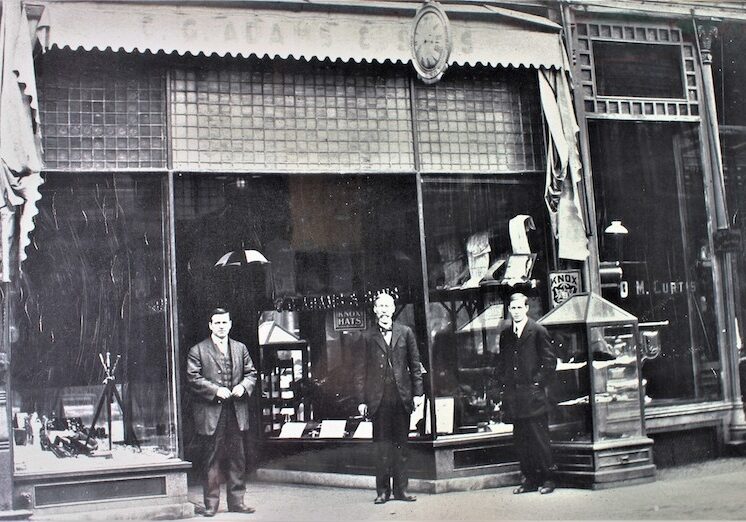
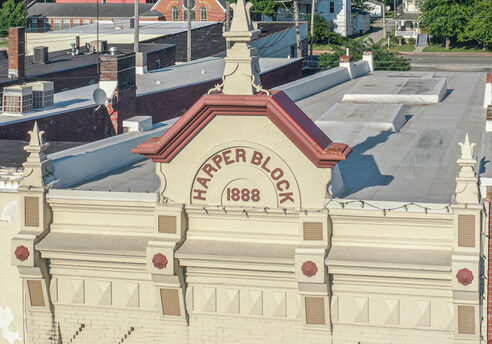
A major turning point came in 1998, when the Goshen Historical Society purchased the historic Adams Store building at 124 South Main Street—a 99-year-old retail structure in the heart of downtown Goshen. The building was transformed into the Goshen Historical Museum, providing the Society with a permanent, public home for its collections.
This milestone allowed the Society to fully realize its mission of preservation, education, and community engagement, bringing Goshen’s history out of storage and into the public eye.
Continuing the Legacy
Today, Goshen is a vibrant and evolving city that honors its past while looking confidently toward the future. The Goshen Historical Society stands as a lasting testament to the foresight of its founders and the community’s commitment to preserving its heritage.
Through exhibits, research, educational programming, and community partnerships, the Society ensures that the stories of Goshen—its people, places, and milestones—remain a living and accessible part of the city’s identity for generations to come.